Akhirnya Canon IP1000 dapat dijalankan ke Ubuntu 7.10 |
Akhirnya....Setelah seringkali masalah printer khusunya printer canon (khusunya seri IP1000, 1200, dkk..) membuat kita malas buat pindah ke Ubuntu karena takutnya benar-benar buntu... thanks to takushi dengan personal debiannya akhirnya dapat membuat yakin bahwa linux bukan sumber masalah, tapi sumbernya solusi...:-) Berikut ini tutorial untuk mengaktifkan printer Canon anda..: ketik pada terminal: $sudo gedit /etc/apt/sources.list 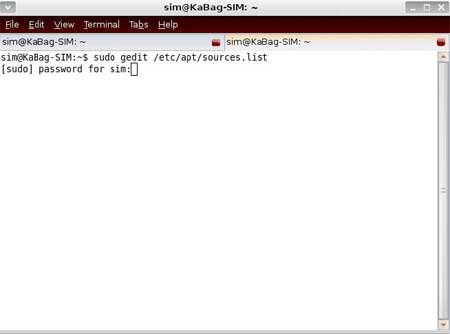 tambahkan 2 baris ini: deb http://www.backports.org/debian sarge-backports main deb http://mambo.kuhp.kyoto-u.ac.jp/~takushi/debian ./ simpan dan tutup sources.list ketik pada terminal: apt-get update (tunggu sampai proses selesai.) kemudian setelah update selesai, yang perlu kita install adalah: untuk printer Canon Pixus 550i / 850i / 950i (i550 / i850 / i950) and iP90 pada terminal ketik : # apt-get install libcnbj-2.2 bjfilter-2.2 pstocanonbj (tunggu sampai proses selesai..) Untuk printer Canon Pixus 560i / 860i / 960i (i560 / i860 / i960) pada terminal ketik : # apt-get install libcnbj-2.4 bjfilter-2.4 pstocanonbj (tunggu sampai proses selesai...) 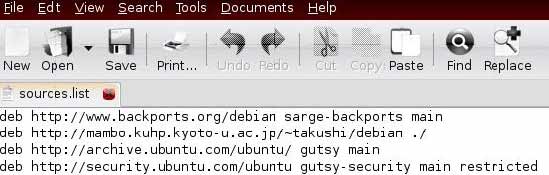 Untuk printer Canon Pixus iP3100 / iP4100 / iP8600 (and Pixma iP1000 / iP1500) pada terminal ketik: # apt-get install libcnbj-2.5 bjfilter-2.5 pstocanonbj (tunggu sampai proses selesai...) Untuk printer Canon Pixus iP2200 / iP4200 / iP6600D / iP7500 / MP500 Driver pada terminal ketik: # apt-get install libcnbj-2.6 bjfilter-2.6 pstocanonbj (tunggu sampai selesai...) 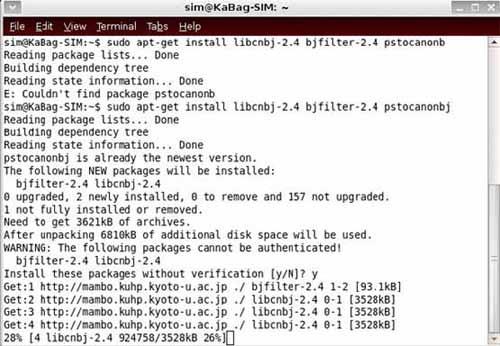 Untuk printer EPSON Color LASER Printers buka sources.list, edit tambahkan baris : deb http://kmuto.jp/debian/mtu debian_dic main contrib non-free 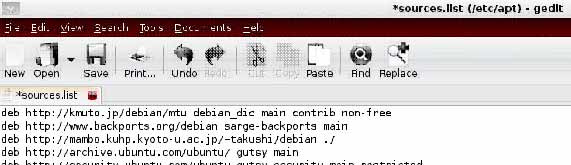 simpan dan tutup sources.list dan kemudian pada terminal ketik: $sudo apt-get update (tunggu proses selesai) printer Epson laser color yang bisa disupport: • LP-9800C • LP-9500C • LP-9200C • LP-9000C • LP-8800C • LP-8500C • LP-8300C • LP-8200C • LP-8000C • LP-3000C install paket diatas dengan perintah pada terminal : # apt-get install cupsys foomatic-filters eplaser-opvp source: http://www.ubb.ac.id/menulengkap.php?judul=Akhirnya%20Canon%20IP1000%20dapat%20dijalankan%20ke%20Ubuntu%207.10&&nomorurut_artikel=25 |
Tampilkan postingan dengan label COMPUTER. Tampilkan semua postingan
Tampilkan postingan dengan label COMPUTER. Tampilkan semua postingan
Senin, 18 April 2011

Daftar Software Program-program Komputer untuk Windows - Linux |
Salah satu kesulitan terbesar ketika melakukan perpindahan (Migrasi) dari sistem operasi Windows ke Linux adalah permasalahan minimnya pengetahuan kita tentang software yang sering atau biasa kita gunakan sehari-hari. Biasanya orang akan mencari software Windows yang menggunakan analogi Linux, walaupun seringkali para user linux tidak dapat menjumpai kebutuhan mereka yang disebabkan minimnya pengetahuan tentang sistem pemrogaman pada Windows. Tabel berikut ini mudah-mudahan dapat sedikit membantu kita yang akan atau sudah melakukan migrasi dari Windows ke Linux untuk menemukan software-software yang sesuai dengan kebutuhan mereka. Tabel ini selalu mengalami perubahan sesuai dengan perkembangan aplikasi software yang terus diperbaharui setiap saat. Apabila anda ingin berpartisipasi dalam program ini untuk menambah sejumlah aplikasi yang relevan, silahkan mengirim email anda ke winlintable[a]linuxrsp.ru dengan mencantumkan nama programnya, Sistem Operasi, penjelasan program (misalnya tujuan program tersebut), dan sebuah link ke official website dari developer program tersebut (bila mengetahuinya). Komentar-omentar, perbaikan, penawaran dan pelaporan terhadap adanya celah atau kelemahan (Bug) juga dapat dikirimkan melalui email iniwinlintable[a]linuxrsp.ru. Catatan :
Perbedaan mendasar antara Windows dan Linux Hampir semua program-program Windows dibuat berdasarkan prinsip "All-in-One", dimana masing-masing developer software membuat source code mereka sendiri-sendiri, prinsip ini sering disebut dengan "Windows-way". Sedangkan pada Unix/Linux , sebuah komponen atau suatu program harus mengeksekusi satu tugas saja, tetapi dengan pengeksekusian yang baik ("UNIX-Way"). Program-program yang dibuat bagi Linux dapat dibayangkan sebagai sebuah blok dari bangunan LEGO, contohnya jika ada sebuah program untuk memeriksa ejaan maka program inipun dapat digunakan oleh program text editor atau email client; atau jika ada sebuah program untuk medownload dalam bentuk baris-baris perintah (command lines program) maka secara sederhana orang dapat pula membuat sebuah program seperti ini berdasarkan visualisasi /desktop/Front-End (graphic interface program). Prinsip-prinsip ini sangat penting untuk diketahui disaat kita hendak mencari suatu analogi dari program-program Windows pada Linux. Untuk informasi lebih lengkap silahkan baca bukunya "Linux and the Unix Philosophy" yang pada salah satu babnya membahas secara khusus mengenai filosofi perbedaan diantara Windows dan Linux ini. Bagi yang tertarik dalam software-software Windows : 1) Pada baris Windows pada tabel ini bukanlah yang Utama, itulah mengapa sebabnya tabel ini secara absolute tidak berisi seluruh software yang ada, akan tetapi hanya berisi daftar software yang terkenal dan terbaik saja. 2) Banyak program-program Linux yang dapat dijalankan pada Windows baik itu dengan menggunakan CygWin maupun dengan Emulator Linux lainnya. source: http://www.ubb.ac.id/menulengkap.php?judul=Daftar%20Software%20Program-program%20Komputer%20untuk%20Windows%20-%20Linux&&nomorurut_artikel=85 |
New news!
Lagi-Lagi Research In Motion Keluarkan Produk Baru
Posted on 11 November 2010 by author
Kini computer tablet telah menyebar ke dunia dan mulai digandrungi. Produk tersebut adalah dari Apple. Dan sekarang Research In Motion ingin menyaingi Apple dengan produk unggulannya tersebut.
Namanya adalah Playbook dan konon harganya di bawah 500 Dolar Amerika. Namun persisnya berapa belum ada yang tahu, masih rahasia. Dan produk baru ini baru akan diluncurkan awal tahun depan nanti.
Memang Apple dengan produk iPadnya telah membuat heboh dunia. Produk tersebut hanya dalam waktu 80 hari pertama telah terjual sebanyak 3 juta unit. Jenis produk baru ini memang telah sanggup menggusur perhatian public terhadap laptop dan smartphone.
Dan RIM ini tak kalah pintarnya untuk menyaingi Apple. Ia dengan Playbooknya tersebut menawarkan beberapa keunggulan yang tidak bisa dimiliki oleh iPad dari Apple. Playbook ini punya kelebihan mampu untuk animasi yaitu Flash dan bisa untuk video dari Adobe internet juga. Dan lagipula layarnya bisa lebih kecil daripada iPad.
Dan pasaran yang menjadi sasaran utama dan pertama setelah Amerika adalah Korea Selatan. Karena konsumen di sana banyak dan inovatif.
Pengguna Internet Di China Terbesar Di Dunia
Memang China adalah bangsa yang terhebat dan tercepat dalam meraih rekor dunia. Penggunaan internet kini telah menjadi yang terbesar di dunia sejak tahun 2010 kemarin. Dan itu mencapai kira-kira 34,3% total penduduknya.
Sementara itu Amerika sebagai Negara yang terpadat juga penduduknya hanya mencapai sekitar 230 juta orang dalam penggunaan internet. Hanya lebih banyak sedikit dari total jumlah penduduk Indonesia. Dan pertumbuhan jumlah pengguna internet di China mengalami peningkatan sebanyak 19% dari tahun 2009. ini adalah karena peningkatan penggunaan smartphone di sana.
Dan dari hasil penyurveian maka kurang-lebih penggunaan internet karena smartphone tersebut adalah 2,61 jam per harinya. Akibat dari penggunaan internet yang meningkat ini maka perdagangan secara online pun juga meningkat. Dan yang terutama menyolok adalah para Blogger yang kini mencapai 53,11 juta orang di sana. Dan mereka umumnya juga mengakses Facebook dan Twitter. Padahal katanya pemerintah China telah mensensor kedua situs tersebut namun nyatanya tidak terlalu berpengaruh.
Sementara itu pasar belanja online menjadi naik sebesar 48,6% sejak tahun 2010 yang lalu di China. Para pembelanja di China kebanyakan mempergunakan laptop. Dan itu juga mengalami peningkatan. Contohnya adalah salah satu situs belanja online milik China yaitu Alibaba kini telah mempunyai anggota sebanyak 200 juta orang atau kurang lebihnya sebanyak seluruh penduduk Indonesia. Namun sayangnya ironis bahwa ternyata kecepatan internet di China masih hanya rata-rata 100,9 Kbps saja. Padahal kecepatan rata-rata internet di dunia adalah hingga sebesar 212,5 Kbps.
source: http://www.media-nusantara.com/news/pengguna-internet-di-china-terbesar-di-dunia.html
Layanan 3G Indonesia Masih "Lemot"
16/02/2011
Jaringan third-generation technology (3G) saat ini dinilai be lum mampu mengimbangi jumlah pengakses internet di Indonesia yang terus mening kat tajam. Sejatinya, jaringan 3G harus segera diperbaiki seperti yang dilakukan Code-Division Mul tiple Access (CDMA) berupa kolaborasi antar operator se hingga membuat spektrum inter net menjadi lebih besar.
Direktur South East Asia And Pasific Qualcomm John Ste fanac mengemukakan, pe ngem bangan jaringan komu nikasi 3G di Indo nesia harus ditingkatkan. Pasalnya, pengakses internet di Indonesia terutama lewat piranti mobile phone naik secara signi fikan.
“Saya sempat mencoba jari ngan 3G di Indonesia. Untuk membuka email saja masih sulit dan lemot,” keluh Stefanac. Bahkan, Stefanac ber tanya balik kepada wartawan,”Bagai mana saat Anda coba meng ung gah foto dalam situs jejaring sosial seperti Facebook, lambat bukan?”
“Untuk itu, ke depan jaringan 3G di Indonesia harus diting katkan, sehingga pengakses in ternet lewat ponsel bisa lebih mudah mengakses layanan ter sebut,” pungkas Stefanac.
Direktur South East Asia And Pasific Qualcomm John Ste fanac mengemukakan, pe ngem bangan jaringan komu nikasi 3G di Indo nesia harus ditingkatkan. Pasalnya, pengakses internet di Indonesia terutama lewat piranti mobile phone naik secara signi fikan.
“Saya sempat mencoba jari ngan 3G di Indonesia. Untuk membuka email saja masih sulit dan lemot,” keluh Stefanac. Bahkan, Stefanac ber tanya balik kepada wartawan,”Bagai mana saat Anda coba meng ung gah foto dalam situs jejaring sosial seperti Facebook, lambat bukan?”
“Untuk itu, ke depan jaringan 3G di Indonesia harus diting katkan, sehingga pengakses in ternet lewat ponsel bisa lebih mudah mengakses layanan ter sebut,” pungkas Stefanac.
Negara dengan Internet TERCEPAT
Tiap tahun jumlah pengguna internet di dunia meningkat pesat dan diiringin dengan perkembangan teknologi yang mendampinginnya (Baca: Daftar Jumlah Pengguna Internet Dunia 1995-2008.) Peningkatan ini terjadi karena internet memiliki pengaruh yang besar terhadap perkembangan dan penyebaran ilmu pengetahuan, sains, informasi up to date, relasi (situs jejaring), hingga ekonomi, bisnis, politik dan religi. Berbagai transaksi jual beli yang sebelumnya hanya bisa dilakukan dengan cara tatap muka (dan sebagian sangat kecil melalui pos atau telepon), kini sangat mudah dan sering dilakukan melalui Internet atau lebih dikenal e-commerce.
Besarnya pengaruh (sisi positif) internet membuat negara-negara maju berlomba memperbesar infrastruktur, jaringan dan teknologi internet. Bagi pemerintah bersama stakeholder (provider/operator) negara-negara maju, mereka telah memperbesar kecepatan internet hingga angka fantastis bila dibanding dengan negara seperti Indonesia. Adalah negara Korea Selatan yang menjadi negara dengan akses internet tercepat, yang disusul Jepang.
Berikut 12 Negara (Wilayah) dengan kecepatan Internet tertinggi
Rank Negara Kecepatan Akses
1 Korea Selatan 21,71 Mb/s
2 Jepang 16.00 Mb/s
3 Aland Island 15.02 Mb/s
4 Lithuania 13.44 Mb/s
5 Latvia 13.35 Mb/s
6 Swedia 13.26 Mb/s
7 Romania 12.85 Mb/s
8 Belanda 12.32 Mb/s
9 Bulgaria 12.02 Mb/s
10 Republik Moldova 10.00 Mb/s
11 Hong Kong (China) 9.52 Mb/s
12 Slovakia 8.92 Mb/s
– – –
28 Amerika Serikat 5.1 Mb/s (Update)
– – –
138 Indonesia 1.21 Mb/s
Sumber : Speedtest (Update 14 Okt 2009)
Tabel diatas menunjukkan kecepatan rata-rata akses internet yang berhasil diolah oleh speedtest.net. Dari kecepatan tersebut, maka waktu rata-rata untuk mengakses sebuah situs di Korea atau Jepang hanya dibutuh waktu hitungan ******* Hal yang berbeda dengan Indonesia, yang membutuh waktu beberapa detik hingga belasan bahkan puluhan
dari: http://www.huteri.com/738/negara-dengan-internet-tercepat
Indonesia Pengguna Jejaring Sosial Terbanyak di Dunia


Medan (ANTARA News) – Berdasarkan statistik menujukkan bahwa masyarakat Indonesia merupakan salah satu negara dengan pengguna jejaring sosial terbanyak di dunia.
General Manager Nokia Indonesia, Bob McDougall, di Medan, Sabtu, mengatakan, bahwa di antara jejaring sosial yang banyak digunakan masyarakat Indonesia tersebut diantaranya adalah facebook, twitter, taggged dan friendster.
Ia mengatakan, sebagian besar masyarakat Indonesia menggunakan jejaring sosial tersebut dari ponsel mereka masing-masing. Ini merupakan perwujudan nyata dari conneting people yang selalu menjadi inti dari merk Nokia.
Tingginya pengguna jejaring sosial tersebut menjadi salah satu latar belakang nokia meluncurkan produk terbaru tipe C3 yang dilengkapi dengan Nokia messaging yang memungkinkan pengguna untuk mengatur email dan chat langsung dari perangkat tanpa komputer pribadi (PC).
Nokia Messaging mendukung akun email seperti Ovi Mail, Gmail, Yahoo Mail, Windows Live Hotmail, beberapa penyedia email lokal dam juga chat lewat ovi Chat, Yahoo massenger, Windows Live Mesengger dan Google Talk.
Termasuk fitur penting lainnya adalah konektivitas Wi-Fi, kamera, 2 megapiksel, layar warna, dan dukungan untuk kartu memori hingga 8 GB.
Nokia C3 akan tersedia dalam warna golden White, Slate grey dan Hot Pink. Ovi store tersedia di nokia C3 bagi pengguna untuk mengunduh aplikasi, permainan, audio dan video dan opsi personalisasi.
Untuk mengenalkan Nokia C3 tersebut, lanjut dia, Nokia mengadakan berbagai kegiatan untuk mempromosikannya. Salah satunya dengan mengadakan kompetisi Online “Nokia C3 eksismeter:se-eksis apa sih kamu”.
Dalam kompetisi ini para peserta mengumpulkan nilai terbanyak lewat aktivitas di jejaring sosial seperti facebook dan twitter dengan mendapatkan lebih banyak pengikut dan teman, memperbaharui status dan mengomentari komentar teman.
Tiap minggunya sepasang peserta pria dan wanita akan dipilih berdasarkan nilai tertinggi dan masing-masing akan mendapatkan Nokia C3.
“Diakhir kompetisi online ini, dua pemenang utama akan diumumkan.Para pemenang bis amengundnag teman-teman mereka untuk menonton film secara eksklusif disalahsatu studio di bioskop pilihan mereka yang akan di buka hanya untuk mereka,” katanya.
Selasa, 12 April 2011
Japan Crisis Pushes Up Computer Chip Prices
Computer chips prices rose further on Tuesday, as damage at Japanese plants and infrastructure caused by Friday's devastating earthquake and tsunami threatens to disrupt the global manufacturing chain for longer than expected.
Japan accounts for one-fifth of the world's semiconductor production, including about 40pc of flash memory chips used in everything from smartphones, tablets to computers.
Dozens of Japanese firms from component makers to electronics firms and carmakers are keeping their plants shuttered, while damage to infrastructure including power, roads, rails and ports will take months to repair.
Research firm IHS iSuppli said on Tuesday the quake and its aftermath could result in significant shortages of some electronic parts and lead to big price hikes.
Even if shipments of semiconductor parts affected by the quake were disrupted for only two weeks, shortages and their price impact were likely to linger until the third quarter, iSuppli said.
Concern about chip supplies hits shares in Arm, the British company that designs chips used in most of the world's smartphones, and Infineon, the German semi-conductor company, which were down 7pc and 8.6pc respectively in morning trading in Europe.
Demand for NAND flash memory chips has been surging, led by mobile devices and tablets such as Apple's iPad 2, which is estimated to have sold almost 1 million units during its weekend debut.
"While there are few reports of actual damage at electronic production facilities, impacts on the transportation and power infrastructure will result in disruptions of supply, resulting in the short supply and rising prices," iSuppli said.
"Components impacted will include NAND flash memory, dynamic random access memory (DRAM), microcontrollers, standard logic, liquid-crystal display (LCD) panels, and LCD parts and materials."
Spot prices of NAND flash chips extended their gains on Tuesday, rising nearly 1pc after a 20pc jump on Monday, while DRAM memory chip prices gained 0.2pc on top of a 7pc rise on Monday, according to price tracker DRAMeXchange.
Demand for NAND flash memory chips has been surging, led by mobile devices and tablets such as Apple's iPad 2, which is estimated to have sold almost 1 million units during its weekend debut.
Toshiba, which supplies about one-third of the world's NAND flash memory chips, said it was still inspecting its System LSI factory in Iwate, the only one halted by the quake and tsunami and could not say when it might re-open.
The factory produces microprocessors and image sensors.
Fellow chipmaker Texas Instruments on Monday warned its two suspended plants would take until July to return to full production, though it had managed to re-direct 60pc of their output to other sites.
Canon said it may not be able to resume production at three factories making office equipment and lenses used in audio-visual players this week.
Sony also said its eight factories making equipment ranging from optical devices, IC cards, blu ray discs, chip equipment and lithium batteries remained closed, with no guarantees on resuming date.
Taiwan's Wintek, which makes the touch module for the iPad 2, said it had more than two weeks of inventory left and the short-term impact was limited. However, a source at the company said it was using Japanese components and was looking for secondary suppliers.
Hynix Semiconductor, the world's No.2 memory chipmaker, said it had around two months of wafer inventory but a prolonged disruption in supplies of wafers by major producers such as Shin-Etsu may interrupt its production schedule.
Shin-Etsu said on Tuesday it had restarted one factory near Tokyo, but two plants near the worst-hit areas remained closed and the company was unable to say when production will resume at the sites. It is trying to boost production elsewhere to make up the shortfall caused by the shutdown.
Analysts estimate Shin-Etsu is the biggest supplier for Hynix, offering more than 50pc of the South Korean firm's wafer requirement.
"Since we have enough inventory, there'll be no short-term impact but as the situation gets worse and prolonged, it could have a wide-ranging impact to the overall industry because Japan is a major wafer supplier. We are diversifying supply sources to non-Japanese firms including Korean firms," said a Hynix spokesman.
Initial concerns that up to 20pc of Japanese steelmaking capacity had been affected appeared overblown and steelmakers were instead likely to face major hits to demand as automakers shuttered production for days.
Toyota, Honda and Nissan have closed dozens of plants in Japan.
Renault-Samsung, which produces Nissan-badged cars such as the Sunny and Almera sedans, said a protracted disruption in Japan could hit its sales, as Japanese parts account for around 10 percent of its total components imports.
source : http://www.telegraph.co.uk/finance/newsbysector/mediatechnologyandtelecoms/electronics/8382505/Japan-crisis-pushes-up-computer-chip-prices.html
Japan accounts for one-fifth of the world's semiconductor production, including about 40pc of flash memory chips used in everything from smartphones, tablets to computers.
Dozens of Japanese firms from component makers to electronics firms and carmakers are keeping their plants shuttered, while damage to infrastructure including power, roads, rails and ports will take months to repair.
Research firm IHS iSuppli said on Tuesday the quake and its aftermath could result in significant shortages of some electronic parts and lead to big price hikes.
Even if shipments of semiconductor parts affected by the quake were disrupted for only two weeks, shortages and their price impact were likely to linger until the third quarter, iSuppli said.
Concern about chip supplies hits shares in Arm, the British company that designs chips used in most of the world's smartphones, and Infineon, the German semi-conductor company, which were down 7pc and 8.6pc respectively in morning trading in Europe.
Demand for NAND flash memory chips has been surging, led by mobile devices and tablets such as Apple's iPad 2, which is estimated to have sold almost 1 million units during its weekend debut.
"While there are few reports of actual damage at electronic production facilities, impacts on the transportation and power infrastructure will result in disruptions of supply, resulting in the short supply and rising prices," iSuppli said.
"Components impacted will include NAND flash memory, dynamic random access memory (DRAM), microcontrollers, standard logic, liquid-crystal display (LCD) panels, and LCD parts and materials."
Spot prices of NAND flash chips extended their gains on Tuesday, rising nearly 1pc after a 20pc jump on Monday, while DRAM memory chip prices gained 0.2pc on top of a 7pc rise on Monday, according to price tracker DRAMeXchange.
Demand for NAND flash memory chips has been surging, led by mobile devices and tablets such as Apple's iPad 2, which is estimated to have sold almost 1 million units during its weekend debut.
Toshiba, which supplies about one-third of the world's NAND flash memory chips, said it was still inspecting its System LSI factory in Iwate, the only one halted by the quake and tsunami and could not say when it might re-open.
The factory produces microprocessors and image sensors.
Fellow chipmaker Texas Instruments on Monday warned its two suspended plants would take until July to return to full production, though it had managed to re-direct 60pc of their output to other sites.
Canon said it may not be able to resume production at three factories making office equipment and lenses used in audio-visual players this week.
Sony also said its eight factories making equipment ranging from optical devices, IC cards, blu ray discs, chip equipment and lithium batteries remained closed, with no guarantees on resuming date.
Taiwan's Wintek, which makes the touch module for the iPad 2, said it had more than two weeks of inventory left and the short-term impact was limited. However, a source at the company said it was using Japanese components and was looking for secondary suppliers.
Hynix Semiconductor, the world's No.2 memory chipmaker, said it had around two months of wafer inventory but a prolonged disruption in supplies of wafers by major producers such as Shin-Etsu may interrupt its production schedule.
Shin-Etsu said on Tuesday it had restarted one factory near Tokyo, but two plants near the worst-hit areas remained closed and the company was unable to say when production will resume at the sites. It is trying to boost production elsewhere to make up the shortfall caused by the shutdown.
Analysts estimate Shin-Etsu is the biggest supplier for Hynix, offering more than 50pc of the South Korean firm's wafer requirement.
"Since we have enough inventory, there'll be no short-term impact but as the situation gets worse and prolonged, it could have a wide-ranging impact to the overall industry because Japan is a major wafer supplier. We are diversifying supply sources to non-Japanese firms including Korean firms," said a Hynix spokesman.
Initial concerns that up to 20pc of Japanese steelmaking capacity had been affected appeared overblown and steelmakers were instead likely to face major hits to demand as automakers shuttered production for days.
Toyota, Honda and Nissan have closed dozens of plants in Japan.
Renault-Samsung, which produces Nissan-badged cars such as the Sunny and Almera sedans, said a protracted disruption in Japan could hit its sales, as Japanese parts account for around 10 percent of its total components imports.
source : http://www.telegraph.co.uk/finance/newsbysector/mediatechnologyandtelecoms/electronics/8382505/Japan-crisis-pushes-up-computer-chip-prices.html
Chinese Computer Trumps US as One of World's Fastest
A Chinese scientific research center has built the fastest supercomputer ever made, replacing the United States as maker of the swiftest machine, and giving China bragging rights as a technology superpower.
Lawrence Lawry | Photodisc | Getty Images
The computer, known as Tianhe-1A, has 1.4 times the horsepower of the current top computer, which is at a national laboratory in Tennessee, as measured by the standard test used to gauge how well the systems handle mathematical calculations, said Jack Dongarra, a University of Tennessee computer scientist who maintains the official supercomputer rankings.
Although the official list of the top 500 fastest machines, which comes out every six months, is not due to be completed by Mr.
Dongarra until next week, he said the Chinese computer “blows away the existing No. 1 machine.”
He added, “We don’t close the books until Nov.1, but I would say it is unlikely we will see a system that is faster.”
Officials from the Chinese research center, the National University of Defense Technology, are expected to reveal the computer’s performance on Thursday at a conference in Beijing.
The center says it is “under the dual supervision of the Ministry of National Defense and the Ministry of Education.”
The race to build the fastest supercomputer has become a source of national pride as these machines are valued for their ability to solve problems critical to national interests in areas like defense, energy, finance and science.
Supercomputing technology also finds its way into mainstream business; oil and gas companies use it to find reservoirs and Wall Street traders use it for superquick automated trades.
Procter & Gamble [PG 62.19 ] even uses supercomputers to make sure that Pringles go into cans without breaking.
And typically, research centers with large supercomputers are magnets for top scientific talent, adding significance to the presence of the machines well beyond just cranking through calculations.
Over the last decade, the Chinese have steadily inched up in the rankings of supercomputers.
Tianhe-1A stands as the culmination of billions of dollars in investment and scientific development, as China has gone from a computing afterthought to a world technology superpower.
“What is scary about this is that the U.S. dominance in high-performance computing is at risk,” said Wu-chun Feng, a supercomputing expert and professor at Virginia Polytechnic Institute and State University.
“One could argue that this hits the foundation of our economic future.”
Modern supercomputers are built by combining thousands of small computer servers and using software to turn them into a single entity.
In that sense, any organization with enough money and expertise can buy what amount to off-the-shelf components and create a fast machine.
The Chinese system follows that model by linking thousands upon thousands of chips made by the American companies Intel and Nvidia.
But the secret sauce behind the system — and the technological achievement — is the interconnect, or networking technology, developed by Chinese researchers that shuttles data back and forth across the smaller computers at breakneck rates, Mr.Dongarra said.
“That technology was built by them,” Mr.Dongarra said.
“They are taking supercomputing very seriously and making a deep commitment.”
The Chinese interconnect can handle data at about twice the speed of a common interconnect called InfiniBand used in many supercomputers.
For decades, the United States has developed most of the underlying technology that goes into the massive supercomputers and has built the largest, fastest machines at research laboratories and universities.
Some of the top systems simulate the effects of nuclear weapons, while others predict the weather and aid in energy research.
In 2002, the United States lost its crown as supercomputing kingpin for the first time in stunning fashion when Japan unveiled a machine with more horsepower than the top 20 American computers combined.
The United States government responded in kind, forming groups to plot a comeback and pouring money into supercomputing projects.
The United States regained its leadership status in 2004, and has kept it, until now.
At the computing conference on Thursday in China, the researchers will discuss how they are using the new system for scientific research in fields like astrophysics and bio-molecular modeling.
Tianhe-1A, which is housed in a building at the National Supercomputing Center in Tianjin, can perform mathematical operations about 29 million times faster than one of the earliest supercomputers, built in 1976.
For the record, it performs 2.5 times 10 to the 15th power mathematical operations per second.
Mr.Dongarra said a long-running Chinese project to build chips to rival those from Intel and others remained under way and looked promising.
“It’s not quite there yet, but it will be in a year or two,” he said.
He also said that in November, when the list comes out, he expected a second Chinese computer to be in the top five, culminating years of investment.
“The Japanese came out of nowhere and really caught people off guard,” Mr.Feng said.
“With China, you could see this one coming.” Steven J.Wallach, a well-known computer designer, played down the importance of taking the top spot on the supercomputer rankings.
“It’s interesting, but it’s like getting to the four-minute mile,” Mr.Wallach said. “The world didn’t stop. This is just a snapshot in time.”
The research labs often spend weeks tuning their systems to perform well on the standard horsepower test.
But just because a system can hammer through trillions of calculations per second does not mean it will do well on the specialized jobs that researchers want to use it for, Mr.Wallach added.
The United States has plans in place to make much faster machines out of proprietary components and to advance the software used by these systems so that they are easy for researchers to use.
But those computers remain years away, and for now, China is king.
“They want to show they are No. 1 in the world, no matter what it is,” Mr.Wallach said. “I don’t blame them.”
By Ashlee Vance
source : http://www.cnbc.com/id/39886462/page/2/
Lawrence Lawry | Photodisc | Getty Images
The computer, known as Tianhe-1A, has 1.4 times the horsepower of the current top computer, which is at a national laboratory in Tennessee, as measured by the standard test used to gauge how well the systems handle mathematical calculations, said Jack Dongarra, a University of Tennessee computer scientist who maintains the official supercomputer rankings.
Although the official list of the top 500 fastest machines, which comes out every six months, is not due to be completed by Mr.
Dongarra until next week, he said the Chinese computer “blows away the existing No. 1 machine.”
He added, “We don’t close the books until Nov.1, but I would say it is unlikely we will see a system that is faster.”
Officials from the Chinese research center, the National University of Defense Technology, are expected to reveal the computer’s performance on Thursday at a conference in Beijing.
The center says it is “under the dual supervision of the Ministry of National Defense and the Ministry of Education.”
The race to build the fastest supercomputer has become a source of national pride as these machines are valued for their ability to solve problems critical to national interests in areas like defense, energy, finance and science.
Supercomputing technology also finds its way into mainstream business; oil and gas companies use it to find reservoirs and Wall Street traders use it for superquick automated trades.
Procter & Gamble [PG 62.19 ] even uses supercomputers to make sure that Pringles go into cans without breaking.
And typically, research centers with large supercomputers are magnets for top scientific talent, adding significance to the presence of the machines well beyond just cranking through calculations.
Over the last decade, the Chinese have steadily inched up in the rankings of supercomputers.
Tianhe-1A stands as the culmination of billions of dollars in investment and scientific development, as China has gone from a computing afterthought to a world technology superpower.
“What is scary about this is that the U.S. dominance in high-performance computing is at risk,” said Wu-chun Feng, a supercomputing expert and professor at Virginia Polytechnic Institute and State University.
“One could argue that this hits the foundation of our economic future.”
Modern supercomputers are built by combining thousands of small computer servers and using software to turn them into a single entity.
In that sense, any organization with enough money and expertise can buy what amount to off-the-shelf components and create a fast machine.
The Chinese system follows that model by linking thousands upon thousands of chips made by the American companies Intel and Nvidia.
But the secret sauce behind the system — and the technological achievement — is the interconnect, or networking technology, developed by Chinese researchers that shuttles data back and forth across the smaller computers at breakneck rates, Mr.Dongarra said.
“That technology was built by them,” Mr.Dongarra said.
“They are taking supercomputing very seriously and making a deep commitment.”
The Chinese interconnect can handle data at about twice the speed of a common interconnect called InfiniBand used in many supercomputers.
For decades, the United States has developed most of the underlying technology that goes into the massive supercomputers and has built the largest, fastest machines at research laboratories and universities.
Some of the top systems simulate the effects of nuclear weapons, while others predict the weather and aid in energy research.
In 2002, the United States lost its crown as supercomputing kingpin for the first time in stunning fashion when Japan unveiled a machine with more horsepower than the top 20 American computers combined.
The United States government responded in kind, forming groups to plot a comeback and pouring money into supercomputing projects.
The United States regained its leadership status in 2004, and has kept it, until now.
At the computing conference on Thursday in China, the researchers will discuss how they are using the new system for scientific research in fields like astrophysics and bio-molecular modeling.
Tianhe-1A, which is housed in a building at the National Supercomputing Center in Tianjin, can perform mathematical operations about 29 million times faster than one of the earliest supercomputers, built in 1976.
For the record, it performs 2.5 times 10 to the 15th power mathematical operations per second.
Mr.Dongarra said a long-running Chinese project to build chips to rival those from Intel and others remained under way and looked promising.
“It’s not quite there yet, but it will be in a year or two,” he said.
He also said that in November, when the list comes out, he expected a second Chinese computer to be in the top five, culminating years of investment.
“The Japanese came out of nowhere and really caught people off guard,” Mr.Feng said.
“With China, you could see this one coming.” Steven J.Wallach, a well-known computer designer, played down the importance of taking the top spot on the supercomputer rankings.
“It’s interesting, but it’s like getting to the four-minute mile,” Mr.Wallach said. “The world didn’t stop. This is just a snapshot in time.”
The research labs often spend weeks tuning their systems to perform well on the standard horsepower test.
But just because a system can hammer through trillions of calculations per second does not mean it will do well on the specialized jobs that researchers want to use it for, Mr.Wallach added.
The United States has plans in place to make much faster machines out of proprietary components and to advance the software used by these systems so that they are easy for researchers to use.
But those computers remain years away, and for now, China is king.
“They want to show they are No. 1 in the world, no matter what it is,” Mr.Wallach said. “I don’t blame them.”
By Ashlee Vance
source : http://www.cnbc.com/id/39886462/page/2/
Revealed: World's Oldest Computer

It looks like a heap of rubbish, feels like flaky pastry and has been linked to aliens. For decades, scientists have puzzled over the complex collection of cogs, wheels and dials seen as the most sophisticated object from antiquity, writes Helena Smith. But 102 years after the discovery of the calcium-encrusted bronze mechanism on the ocean floor, hidden inscriptions show that it is the world's oldest computer, used to map the motions of the sun, moon and planets.
'We're very close to unlocking the secrets,' says Xenophon Moussas,an astrophysicist with a Anglo-Greek team researching the device. 'It's like a puzzle concerning astronomical and mathematical knowledge.'
Known as the Antikythera mechanism and made before the birth of Christ, the instrument was found by sponge divers amid the wreckage of a cargo ship that sunk off the tiny island of Antikythera in 80BC. To date, no other appears to have survived.
'Bronze objects like these would have been recycled, but being in deep water it was out of reach of the scrap-man and we had the luck to discover it,' said Michael Wright, a former curator at London's Science Museum. He said the apparatus was the best proof yet of how technologically advanced the ancients were. 'The skill with which it was made shows a level of instrument-making not surpassed until the Renaissance. It really is the first hard evidence of their interest in mechanical gadgets, ability to make them and the preparedness of somebody to pay for them.'
For years scholars had surmised that the object was an astronomical showpiece, navigational instrument or rich man's toy. The Roman Cicero described the device as being for 'after-dinner entertainment'.
But many experts say it could change how the history of science is written. 'In many ways, it was the first analogue computer,' said Professor Theodosios Tassios of the National Technical University of Athens. 'It will change the way we look at the ancients' technological achievements.'
By Helena Smith
source : http://www.guardian.co.uk/technology/2006/aug/20/news.theobserver
New Intel Chip Heading to Tablets
Intel said today it is shipping a new processor slated for tablets from Lenovo and Fujitsu among others, as the world's largest chipmaker tries to blunt an onslaught of designs based on competing silicon from ARM.
The Atom Z670 processor delivers improved video playback--up to 1080p--and longer battery life than previous Z series Atom chips, according to Intel. The chip will also allow smaller, thinner tablet designs owing to a 60 percent reduction in the size of the "die," or the raw piece of silicon that contains the integrated circuits.
In addition to Lenovo and Fujitsu, other device makers including Motion Computing, Razer, and Viliv will bring out tablets based on the Z670. Like other Atom chips, the Z670 supports Google Android, MeeGo, and Windows operating systems. "This unique flexibility delivers...more choice when it comes to tablets and hybrid designs that combine the best features of the netbook and tablet together," Intel said.
At the Intel Developer Forum in Beijing, which begins tomorrow, the company will give a sneak peak of its next-generation Intel Atom platform codenamed "Cedar Trail."
Intel, to date, has been marginalized in the tablet market. Apple's popular iPad, Motorola's Xoom, Samsung's Galaxy Tab, and upcoming tablets from RIM and Hewlett-Packard all use processors based on a design from U.K.-based ARM. Intel has not been successful in the tablet market because, among other reasons, its processors don't meet the power efficiency requirements demanded by tablet and smartphone suppliers.
Read more: http://news.cnet.com/8301-13924_3-20052638-64.html#ixzz1JJT8GOCP
The Atom Z670 processor delivers improved video playback--up to 1080p--and longer battery life than previous Z series Atom chips, according to Intel. The chip will also allow smaller, thinner tablet designs owing to a 60 percent reduction in the size of the "die," or the raw piece of silicon that contains the integrated circuits.
In addition to Lenovo and Fujitsu, other device makers including Motion Computing, Razer, and Viliv will bring out tablets based on the Z670. Like other Atom chips, the Z670 supports Google Android, MeeGo, and Windows operating systems. "This unique flexibility delivers...more choice when it comes to tablets and hybrid designs that combine the best features of the netbook and tablet together," Intel said.
At the Intel Developer Forum in Beijing, which begins tomorrow, the company will give a sneak peak of its next-generation Intel Atom platform codenamed "Cedar Trail."
Intel, to date, has been marginalized in the tablet market. Apple's popular iPad, Motorola's Xoom, Samsung's Galaxy Tab, and upcoming tablets from RIM and Hewlett-Packard all use processors based on a design from U.K.-based ARM. Intel has not been successful in the tablet market because, among other reasons, its processors don't meet the power efficiency requirements demanded by tablet and smartphone suppliers.
Read more: http://news.cnet.com/8301-13924_3-20052638-64.html#ixzz1JJT8GOCP
Cisco: What Went Wrong and What Needs to Be Fixed
Cisco Systems (CSCO) is in trouble. It screwed up and John Chambers acknowledged as much in his memo to employees Monday, Apr.4, which was later published on the company's blog. Chambers didn't go into the details of what has gone down, but after years of following the network giant, we can say straight up that Cisco let its eyes stray from the ball. By not staying true to its core networking focus, Cisco managed to let its market share come under pressure from incumbent players and upstarts. It also allowed rivals to set the agenda for the next big trend in networking: the idea of one unified network.
As traffic becomes increasingly dynamic and comes from myriad networks—be it wireless or from a Web server hosted at Amazon.com (AMZN)—the older ways of building out static networks no longer make sense. They add too much overhead. Think about the work Open Flow folks are doing to separate the data plane from the control plane of the network. This is in response to these shifts in traffic, a shift that Cisco rival Juniper Networks (JNPR) is also watching and plans to address, according to Pradeep Sindhu, director, vice-chairman of the board, and chief technology officer at Juniper. In an interview with Om Malik last month, Sindhu said:
"The nature of traffic today is increasingly dynamic. And so the old ways of addressing and building networks, with very statically provisioned technologies, like circuit switching, is essentially dead. So you have to rethink this architecturally. Point No. 2 is that I believe that the traffic is going to get a lot more stochastic in nature. In other words, unpredictable; both with respect to any given circuit and with respect to the sources and destination, the amount of usage will continue to explode and they will get more and more dynamic and unpredictable."
LOST FOCUS
So while Cisco bought up Pure Digital, the maker of the Flip camera, and focused on creating separate networks for video traffic to flow over, its competitors pulled the entire concept of networking out from under Cisco's feet. And Cisco does best when it focuses on the network. For example, its cloud computing business, where it reinvented the concept of a server to combine the computing and networking into one box, was a visionary idea that fit perfectly with the shift toward the cloud model that was occurring in the computing business. Yes, Cisco gear is expensive and proprietary, but the company built on its familiarity with enterprise customers and its existing foothold in their data centers to expand.
In the last few years, Cisco's forays in the consumer space, video, telepresence, and even collaboration have distracted it from what it is good at on the core networking side. A good example of this is its telepresence initiative. Instead of building a platform that customers could integrate into the far-flung offices of remote employees, Cisco went with a proprietary, high-cost system that people who might otherwise work remotely must travel to in order to take conference calls. Yes, TelePresence is beautiful, but for the wider audience, it's not worth the cost and hassle when Skype or even Logitech's (LOGI) LifeSize is out there offering a cheaper, easier alternative.
So proprietary may be acceptable in an area where Cisco has a huge market share, but in consumer and telepresence—where it is trying to build users and adoption—it forgot that a key tenet of creating a platform is either making it incredibly usable or incredibly open. Cisco tends to favor closed ecosystems but unlike Apple (AAPL), its consumer products don't have the same usability or cachet. So this refocusing of Cisco's on five priorities that include core routing and switching; collaboration; cloud computing; network architectures; and video is good news for the most part, although video is a huge category.
ANALYST REPORT
In an analyst report issued Apr. 5, UBS's (UBS) Nikos Theodosopoulos noted that while the Chambers memo was a recognition of mistakes made, it could become a turning point for the company, perhaps leading Cisco to sell off low-margin or low-growth businesses to focus on a few lines of business. He wrote:
"On Monday, CEO John Chambers wrote on a Cisco Blog upcoming tough decisions the company will make given recent earnings disappointments. Cisco will remain focused on five priorities: leadership in core routing, switching and services; collaboration; data center virtualization and cloud; architectures; and video. These priorities are not surprising in our view. … Some actions investors may favorably perceive is a reduction in target markets to a more manageable number (e.g., from 40+ to less than 10), and organization structure adjustments to reduce bureaucracy (e.g., elimination of councils/boards). We also would view divestment of low growth, low margin businesses as positive (e.g., consumer, set-top box, home networking)."
Cisco has been able to stay ahead of the curve in the service provider market by making gigantic routers for dealing with unimaginable traffic at the edge of the network, a problem that it predicted would occur as broadband networks proliferated and services delivered over the network required more bandwidth. It managed to disrupt the giant computing vendors by consolidating servers and networking in one box, and still has plenty of innovation and knowledge locked inside the 70,700-person company. Cisco may have screwed up, but if it refocuses, we shouldn't count it out.
By Stacey Higginbotham
source : http://www.businessweek.com/technology/content/apr2011/tc2011047_372332.htm
As traffic becomes increasingly dynamic and comes from myriad networks—be it wireless or from a Web server hosted at Amazon.com (AMZN)—the older ways of building out static networks no longer make sense. They add too much overhead. Think about the work Open Flow folks are doing to separate the data plane from the control plane of the network. This is in response to these shifts in traffic, a shift that Cisco rival Juniper Networks (JNPR) is also watching and plans to address, according to Pradeep Sindhu, director, vice-chairman of the board, and chief technology officer at Juniper. In an interview with Om Malik last month, Sindhu said:
"The nature of traffic today is increasingly dynamic. And so the old ways of addressing and building networks, with very statically provisioned technologies, like circuit switching, is essentially dead. So you have to rethink this architecturally. Point No. 2 is that I believe that the traffic is going to get a lot more stochastic in nature. In other words, unpredictable; both with respect to any given circuit and with respect to the sources and destination, the amount of usage will continue to explode and they will get more and more dynamic and unpredictable."
LOST FOCUS
So while Cisco bought up Pure Digital, the maker of the Flip camera, and focused on creating separate networks for video traffic to flow over, its competitors pulled the entire concept of networking out from under Cisco's feet. And Cisco does best when it focuses on the network. For example, its cloud computing business, where it reinvented the concept of a server to combine the computing and networking into one box, was a visionary idea that fit perfectly with the shift toward the cloud model that was occurring in the computing business. Yes, Cisco gear is expensive and proprietary, but the company built on its familiarity with enterprise customers and its existing foothold in their data centers to expand.
In the last few years, Cisco's forays in the consumer space, video, telepresence, and even collaboration have distracted it from what it is good at on the core networking side. A good example of this is its telepresence initiative. Instead of building a platform that customers could integrate into the far-flung offices of remote employees, Cisco went with a proprietary, high-cost system that people who might otherwise work remotely must travel to in order to take conference calls. Yes, TelePresence is beautiful, but for the wider audience, it's not worth the cost and hassle when Skype or even Logitech's (LOGI) LifeSize is out there offering a cheaper, easier alternative.
So proprietary may be acceptable in an area where Cisco has a huge market share, but in consumer and telepresence—where it is trying to build users and adoption—it forgot that a key tenet of creating a platform is either making it incredibly usable or incredibly open. Cisco tends to favor closed ecosystems but unlike Apple (AAPL), its consumer products don't have the same usability or cachet. So this refocusing of Cisco's on five priorities that include core routing and switching; collaboration; cloud computing; network architectures; and video is good news for the most part, although video is a huge category.
ANALYST REPORT
In an analyst report issued Apr. 5, UBS's (UBS) Nikos Theodosopoulos noted that while the Chambers memo was a recognition of mistakes made, it could become a turning point for the company, perhaps leading Cisco to sell off low-margin or low-growth businesses to focus on a few lines of business. He wrote:
"On Monday, CEO John Chambers wrote on a Cisco Blog upcoming tough decisions the company will make given recent earnings disappointments. Cisco will remain focused on five priorities: leadership in core routing, switching and services; collaboration; data center virtualization and cloud; architectures; and video. These priorities are not surprising in our view. … Some actions investors may favorably perceive is a reduction in target markets to a more manageable number (e.g., from 40+ to less than 10), and organization structure adjustments to reduce bureaucracy (e.g., elimination of councils/boards). We also would view divestment of low growth, low margin businesses as positive (e.g., consumer, set-top box, home networking)."
Cisco has been able to stay ahead of the curve in the service provider market by making gigantic routers for dealing with unimaginable traffic at the edge of the network, a problem that it predicted would occur as broadband networks proliferated and services delivered over the network required more bandwidth. It managed to disrupt the giant computing vendors by consolidating servers and networking in one box, and still has plenty of innovation and knowledge locked inside the 70,700-person company. Cisco may have screwed up, but if it refocuses, we shouldn't count it out.
By Stacey Higginbotham
source : http://www.businessweek.com/technology/content/apr2011/tc2011047_372332.htm
Langganan:
Postingan (Atom)
